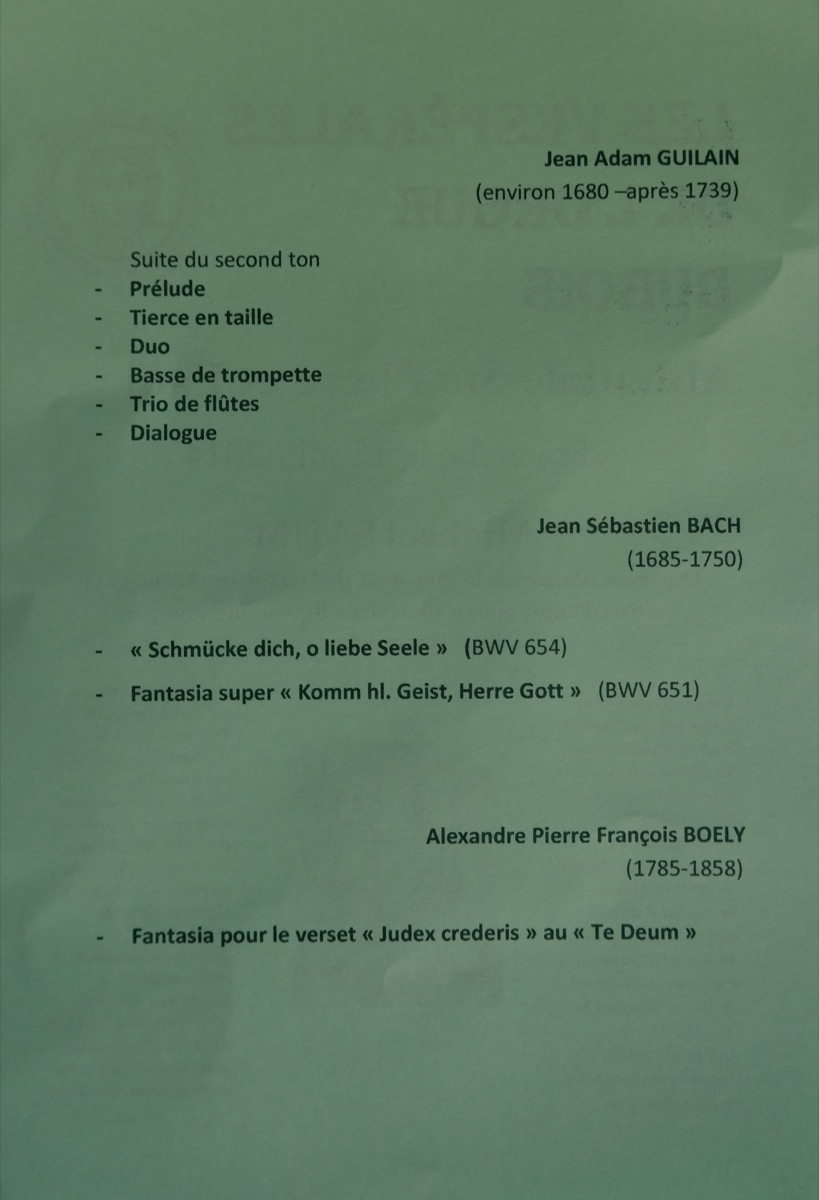
On my way back from a private training, I heard that Paco de Lucia died aged 66 via Deutschlandfunk broadcasting (additional information). Though this is bad news, lets be deeply grateful for the outstanding work he did.
Thanks, Paco.
On my way back from a private training, I heard that Paco de Lucia died aged 66 via Deutschlandfunk broadcasting (additional information). Though this is bad news, lets be deeply grateful for the outstanding work he did.
Thanks, Paco.

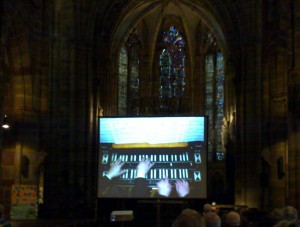
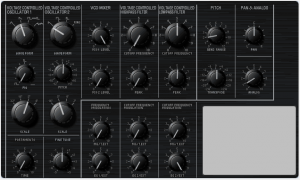
The Access Virus is a very flexible analogue modeling synthesizer. Besides its oscillators, the two filters contribute to its premium audio qualities.
General
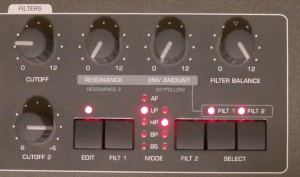
The two filters can be used in two serial modes, a parallel mode, and a split mode. Filter 1 can be used in both 12 and 24 dB modes. It also provides filter saturation or analogue modeling types.
A depiction of the filter modes (Serial 4, Serial 6, Parallel, Split) can be found here.
Since its early incarnations, the Virus provides an (in)famous parameter called »Filter Balance«. At a first glance it is difficult to understand what it does exactly, depending on the abovementioned modes. The manual only sheds little light on what it does exactly. I hope the following description helps to unveil its potential.
Filter Balance in Split Mode
Filter Balance in Parallel Mode
Filter Balance in Serial modes
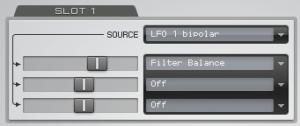
It took me a while to understand the latter behaviour, since I thought in terms of simple analogue circuits respectively the routing of the filters as found in the Korg Z1. The actual behaviour of the Balance knob is more complex than just being a simple balance control. The way it is implemented provides a very musical approach, though. Even more when taking into account that the parameter is controllable via the modulation matrix, e.g. using an LFO.

Yesterday Mohammad played live at Tollhaus, Karlsruhe. It was quite impressive to hear what sounds he is capable of playing on the instruments (like the Tombak or a frame drum). I tried to follow what he was doing with the hands and what was heard through the PA, and I sometimes got the impression that some looping device must be involved. But only Mohammad knows whether I’m right :) .
Initially I thought that a concert with drums alone would be interesting, but only for about half an hour. I was wrong. The 90 minutes of the concert passed like it were seconds. Take this as a recommendation.
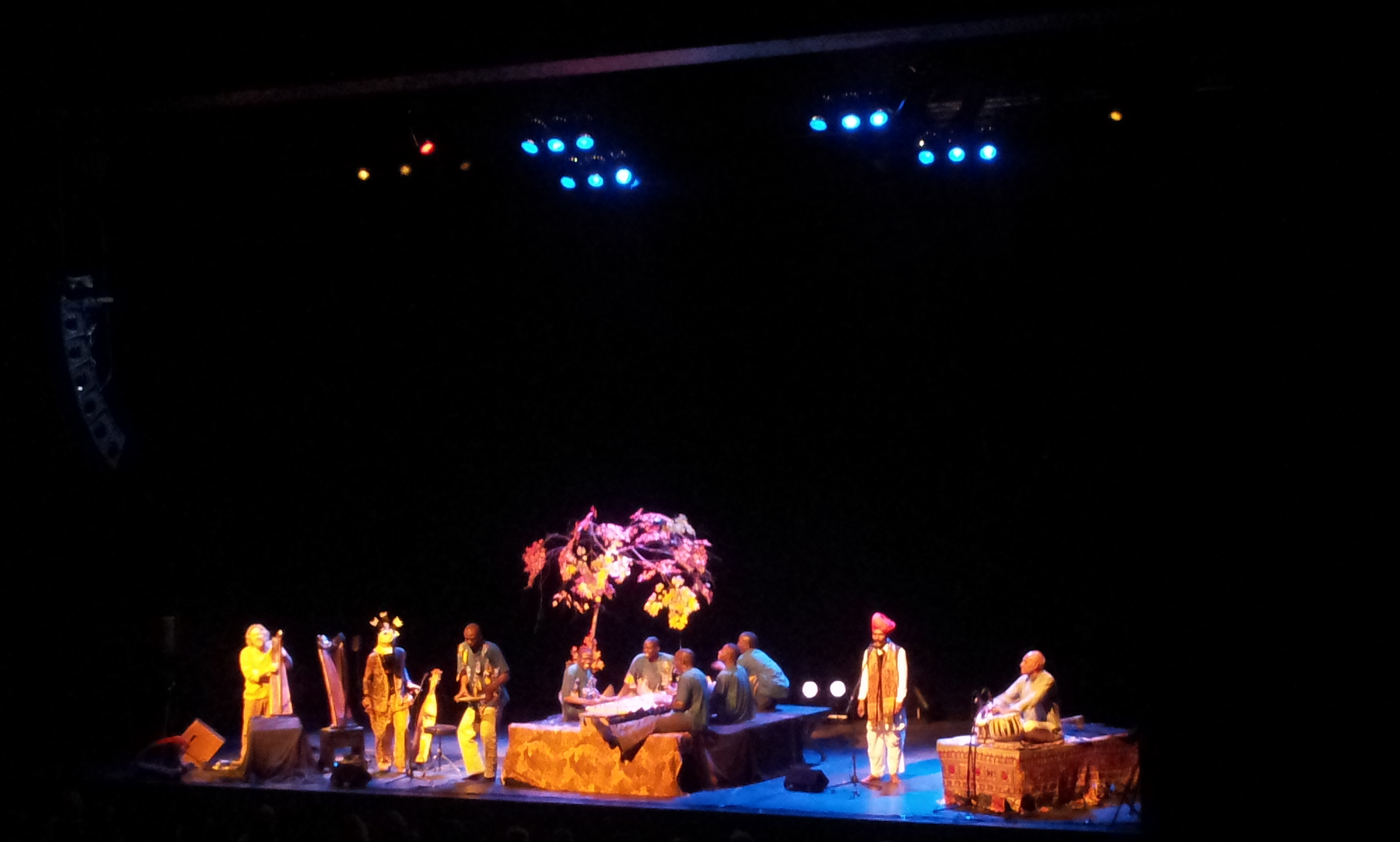
Once again we attended the annual Klangwelten concert which took place for the 27. time this year. Musicians included:
Due to an intense working day, I was a bit late, but we decided to attend anyway and didn’t regret. In case you get the chance to visit one of the concerts, do not hesitate.
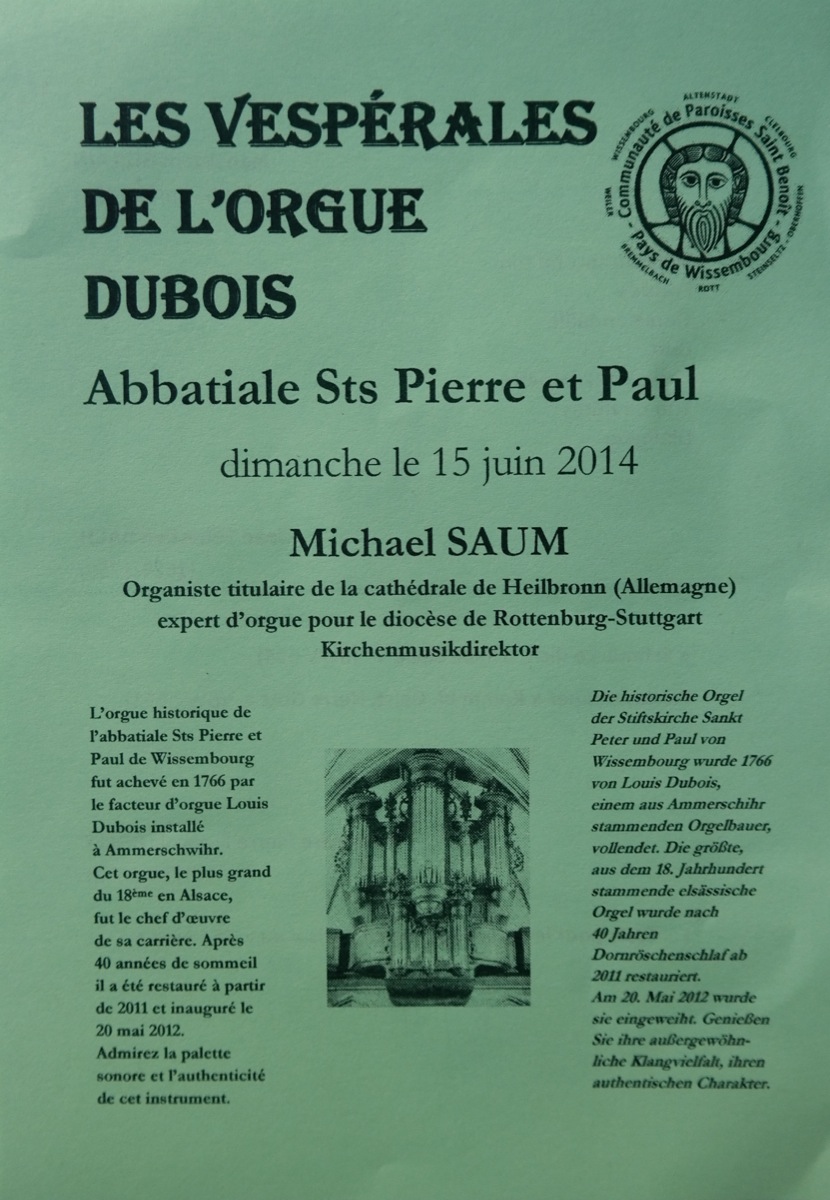
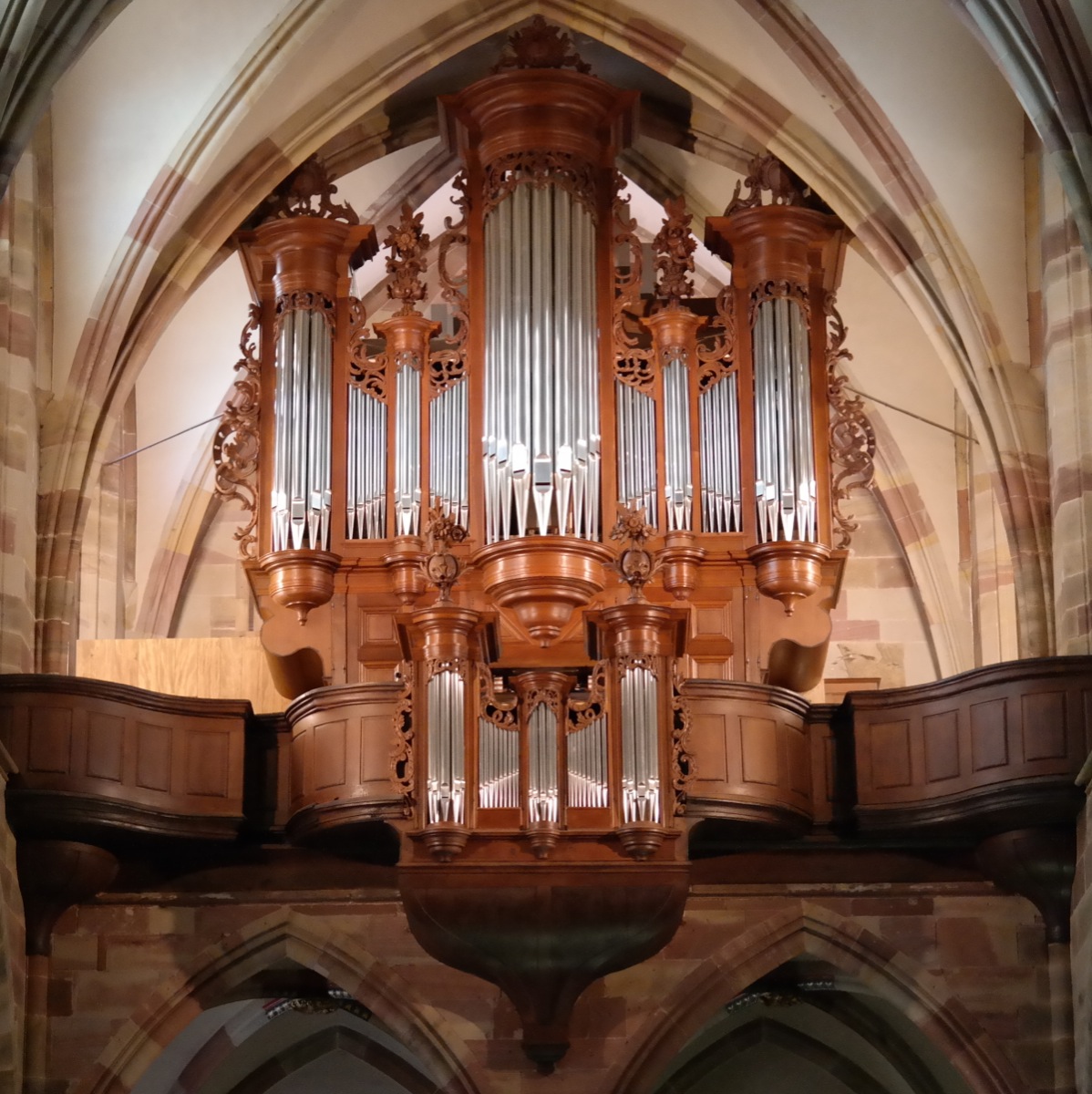
Am Samstag hatten wir die Gelegenheit, die Dubois-Orgel in Wissembourg aus der Nähe zu betrachten, während die Organistin die ein oder andere spannende Geschichte über die Restaurierung zu erzählen wusste.
Keyboard Magazine shares an article about George Duke’s pitch bending techniques. Don’t miss the embedded sound cloud audio at the bottom of the page.
I agree that applying vibrato via the pitch bender is a great technique. However I’ve never tried to set the bend range to a fourth and playing the intervals in between via the bender. And the tip with bending two semitones up and then playing the note below on a monophonic synth was very insightful.
BTW: I’m pretty impressed by the sound of the Arturia mini V software emulation of the Mini Moog. It seems to be rather close to the original with its marvellous unique waveforms.
Thanks Jerry.
Today the last concert of the vesper series on the Dubois organ at Wissembourg took place. Pierre-Alain Clerc played the following pieces:
As last year, I’d like to express my gratitude to all who helped to make the series happen, such as the artists playing though no salary was granted, all the helping hands behind the scenes, and last but not least Denise and Thomas Becker for their continued efforts.
Don’t miss the »Concert spirituel “Te Deum Laudamus” du 6 octobre 2013 en l’abbatiale Sts Pierre et Paul par le Bruchsaler Barockensemble et 150 choristes de la région de Karlsruhe« (PDF).
Today Quentin Guerillot played the following pieces:
Jean Adam Guilain (ca. 1680-1739) – Suite du 2ème ton
Claude Bénigne Balbastre (1727-1799)
Charles Tournemire (1870-1939) – Suite évocatrice
Bengt Hambraeus (1928-2000) – Livre d’orgue
Today Marc Huck (organ), Caroline Huck-Hiebel (organ), and Eric Hiebel (trumpet) played the following pieces:
Today Lydia Schimmer played the following pieces on the Dubois organ:
This concert was quite different:
I got the impression that Lydia Schimmer has carefully chosen pieces matching the instrument quite well – thanks for the efforts, we enjoyed every single minute!
Today Thomas Kientz played the following pieces on the Dubois organ:
Due to the warm weather the city of Wissembourg was not as crowded as on other sundays. The concert was of great joy and pleasure as always :) .
I try to play the Wavedrum frequently. I mainly use the finger tips for playing rather than the palm (or even sticks). Unfortunately I did not pay attention to my finger nails, which scratched the original head quite heavily.
As a consequence, I needed to replace the head. As advertised by Korg, I’ve chosen the Remo Ambassador Fiberskyn3 10“ (model FA-0510-00). Replacement is simple. Just remove the 5 screws, turn the rim to the right (gently, so that the cable between the rim and the body does not get damaged), replace the head, put the rim in place and insert the five screws. The manual describes how to tighten them and how to calibrate the sensors.
While calibrating the rim sensitivity, one may be tempted to set the low value to 0 instead of something like 7. This leads to some hiss coming out of the Wavedrum though.
The next couple of days will show whether the Remo is more resistent than the original head :) .
This year the vespers at Wissembourg are continued. Today Heinrich Grimm played the following pieces:
A friend of mine who attended for the very first time was quite impressed :) .
Today, the saturday before pentecost, we’ve been to Wasigenstein Castle. We enjoyed the warm and sunny day with the children, observing leeches, newts, lizards, and a colubrid.
Near the Sauer, we found those five centimes coined in 1966, 36 years before the Euro became the common european currency. Here’s the opposite side of the coin:
I also had the occasion for some wee small edits concerning the openstreetmap data set.
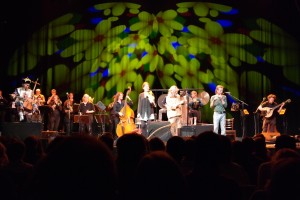
Almost one year passed since the inauguration of the Dubois organ at the abbey of Peter and Paul in Wissembourg. To celebrate the anniversary a nice concert took place yesterday from 8 PM to 10 PM.
Pascal Reber and Markus Eichenlaub played pieces of various composers. Three have been played using four hands by both artists. A screen has been used so that the audience could see the artists and their helpers working at the console.
I especially enjoyed the »Chaconne en fa mineur« of Johann Pachelbel, one of my favorites which I haven’t heard for ages.
Just like last year the instrument can be heard during the vespers each sunday at 5 PM (August 11 at 4 PM) between June 9 and September 15.
I’d like to thank all who helped to make this happen, especially the many volunteers.
I wonder why Korg didn’t name the instrument Kavedrum, since this would better fit other Korg products like Kronos and KingKorg :) .
I had the occasion to play the instrument this weekend. Frankly, I was completely impressed by the sensitivity of its membrane and rim. The built in sounds include really special stuff, and the device invites to play stuff never heard before.
It was designed as a standalone musical instrument. As a consequence, it does not provide interfaces such as MIDI or USB. It cannot be used as a controller to trigger sounds of other instruments. The user cannot upload custom samples, and the device cannot be played by external sequencers. Obviously the product managers had a clear vision in mind.
I also played the Wavedrum Mini. The pad is not a membrane, but a rubber pad. Instead of a rim, it features a clip which can be used external surfaces (tabletops, books etc.) to trigger sounds.
I was impressed how well it responds to user input. However, I perceived the overall sounds less innovative the the one of the Wavedrum (WDX, Oriental, the new Wavedrum Global was not on stock yet).
The third device I tried was the Roland Handsonic, which is available with 10 and 15 Pads. It’s less innovative than the Wavedrum, but it provides external connectivity via MIDI, and responds to user input very nicely.
So which one am I going to buy? None of them. Since I’m a keyboarder and not a percussionist, I’m still content with the m-audio Trigger Finger connected to the Kronos or the computer:
The Kronos cannot cope with it when connected via USB. The first couple of notes will be played, but then the Kronos stops to play further notes. Plugging the TriggerFinger out and in again fixes the issue, but only for a couple of notes. As a workaround, don’t use a USB but a MIDI cable.
Edit: Also see the Mandala.
Though the Lichttonorgel was not a commercial success, it was the very first sample player ever. It was invented and developed by Edwin Welte, a member of the famous company known for their orchestrions and reproducing pianos. The latter instruments can be seen in action in several museums in the south-west of germany.
BTW: The piano roll they invented still can be found as an editor in many software sequencers to create and manipulate control events.
The Lichttonorgel can be seen as one of the predecessors of the Optigan and Orchestron, a competitor of the Mellotron. New sound disks for the Optigan are still available via optigan.com, including sound samples.
I had the occasion to hear a Hang being played one summer eve of 2012 in Wissembourg. It’s a very interesting musical instrument as it appears to be a combination of a percussion and a pitched instrument, similar to a Steelpan.
Dmitry Yeryomin (aka SynthKeyWizard, SKW) shared samples of the instrument for the Korg Kronos. Don’t miss the video where he plays the samples. It is available at the bottom of the download page. Additionally he shared samples of a Duduk. Don’t miss the excellent video.
Another enthusiast maintains the hangblog.
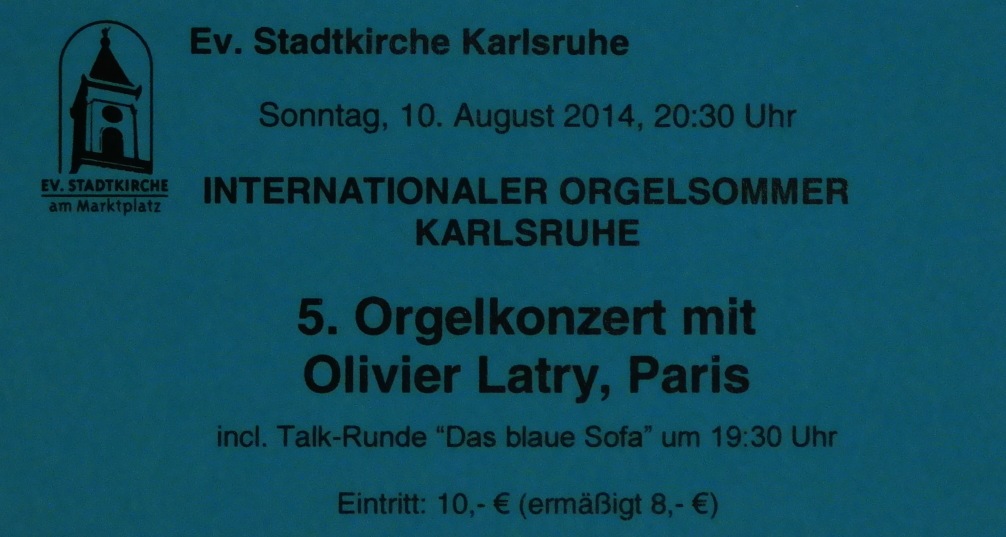
I was invited to attend a concert at the Stadtkirche Karlsruhe. The Staatstheater Karlsruhe performed the oratorio »Esther« of Georg Friedrich Händel. Unfortunately the invitor didn’t leave home, since she was trapped by some severe cold :( .
I found the instrumentation quite interesting. Besides the “usual” candidates like the choir and vocal solists, the bowed string instruments plus some hautboys and bassoons, a lute and a bass lute took part as well as a harp, a harpsicord, and a chest organ. Two horns and a trumpet were the only brass instruments. No drums were involved.
A great concert, well visited. Thanks girls and guys :) .
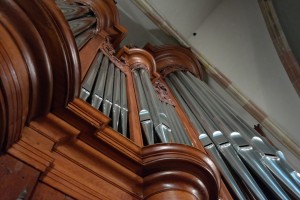
BTW: The choir organ on the left hand side, built by Remy Mahler, is a masterpiece. In case you get a chance to visit a concert, do not hesitate – you won’t regret.